1)


“All foods are equal but some foods are more equal than others”
2)

3)


1)
2)
3)
We’re living a world filled with algorithms.
Stating the obvious, the demand on programing jobs is drastically increasing, but algorithm doesn’t stop just at that.
Patterns are everywhere.
When the traffic lights turn red, we stop; and we walk when it turns green – even though we all know New Yorkers don’t follow traffic rules… and that The Michigan Turn exists at my university town. Anyways! We are in a way being dictated and programed by the transportation system and the AI behind it!
When
Before we get into the obsolescence of an artwork, we need to first specify the creators’s original intent. Is the presentation of works important to the artists? How do the artists foresee their works to be preserved? Or is it supposed to be preserved? Carefully thinking through the nature of the finished piece is also an important procedure of the creating process. The various preservation methods can only assist; how an art piece mean to be preserved should be planned long ago before the work is made. The responsibility lies on not the preservationists but the artists.
Regarding to the assigned reading, there are many archiving and rebooting ways to mediate obsolescence in digital media. I’ll not list them here. But I think they are pretty much everything that one can do to preserve new media art works. By far.
However, I do have concerns regarding how archiving and preservation address obsolescence of new media art works:
1) Artists who lack skills or knowledge, or unable to find resources – but it’s the nature of the work. If you don’t know how to do it and can’t find ways to do it… then just use another approach. Don’t shift the burden to the preservationists. There’re many other ways to tackle one topic and the current method may not necessarily be the best approach.
2) Current methods such as videotaping – like how we approach a performance piece – may not be able to capture the essence of the work. But can performances’ essence be capture? It’s the nature of the work and thus also a part of the work. In a way, its obsolescence is part of its essence.
3) I can’t think of any more concerns because I believe what I can think of has already been tackled by the preservationists. It’s their jobs and they are professionals. Leave it to them and they can do much better than I can.
Okay. The above is what I have written before our visit to the new museum…
After the visit, I wonder, what else can the preservationists do?
NOTHING ELSE.
Pretty much everything has been covered and thought through. With the technology advancement we have so far, that’s the best we can do.
As for my own art-making process, I regards technologies, such as computer and the internet, as mere tools. They are mediums for me similar to oil paints and brushes. If the tool doesn’t work, use another one. If the tool get outdated, use an updated one. In my opinion, like I’ve mentioned at the very beginning of this article, it’s my very own responsibility to consider the preservation of my work beforehand. Embrace the nature of my works!
However, artworks getting obsolescent is inevitable. This doesn’t apply to just the net.art pieces that we discuss here; all pieces are. An extreme example would be those prehistoric cave paintings in France. Anyways, history is always important to document. It captures what was once relevant, enabling the future to reflect. The obsolescence of an artwork is part of its history, and which also becomes part of its essence.
Does post-internet art have to be made on the computer? Or ought to be presented online?
Or maybe, instead of an art movement, the term exists more like referring to a period of time. We have a.C. and BC; does post-internet art refer to the artistic creations made after the birth of internet?
Here is an oil painting.
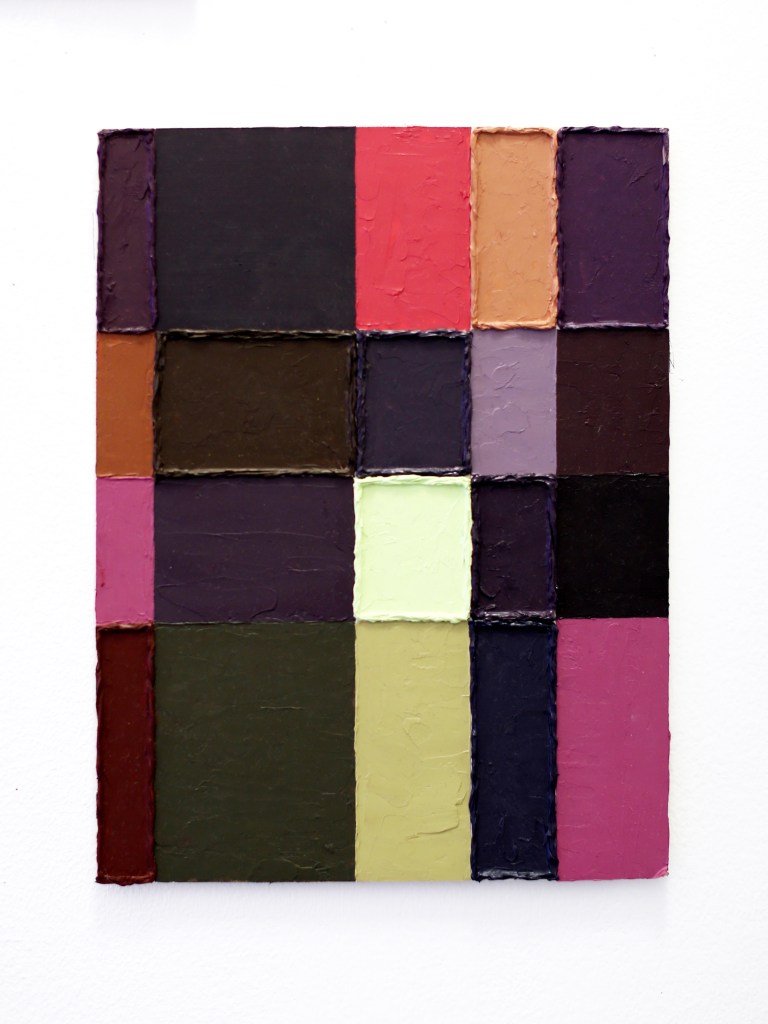
The artist designed a computer program that can randomly generate numbers to set the dimension of canvas. Then it generates numbers for each grid’s measurement. Then it generates ratios of the three primary colors and grays. All the decisions were made by the program. After obtaining these data, the artist strictly followed and hand-painted the piece.
Presentation-wise, the above painting on the wall, being hand-painted with oil paints on canvas, wouldn’t be conventionally regarded as an internet piece. Because it has all the elements of a hand-crafted fine art.
But does it mean post-internet art can’t be hand-crafted?
Personally, I think this piece can be regarded as post-internet, because:
So that’s that. Enough philosophy from me, what do you think?

 Blanche's Blog